
A Chimney Inspection That Explains What It Finds
Is This the Right Service?
Tell us what you notice at the fireplace or on the roof. We call back and confirm whether this visit suits it.
Chimney Inspection: The Short Version
Buying a house rarely tells you the state of its chimney. A Level 1 inspection, the basic grade in the NFPA 211 standard, covers what we can reach without opening anything: the fireplace box, the damper, the flue from below, and the crown and cap on the roof. It costs $52. Your report says what is fine, what to watch and what needs work, with each term explained.
Fireplace and Chimney Are Not the Same Thing
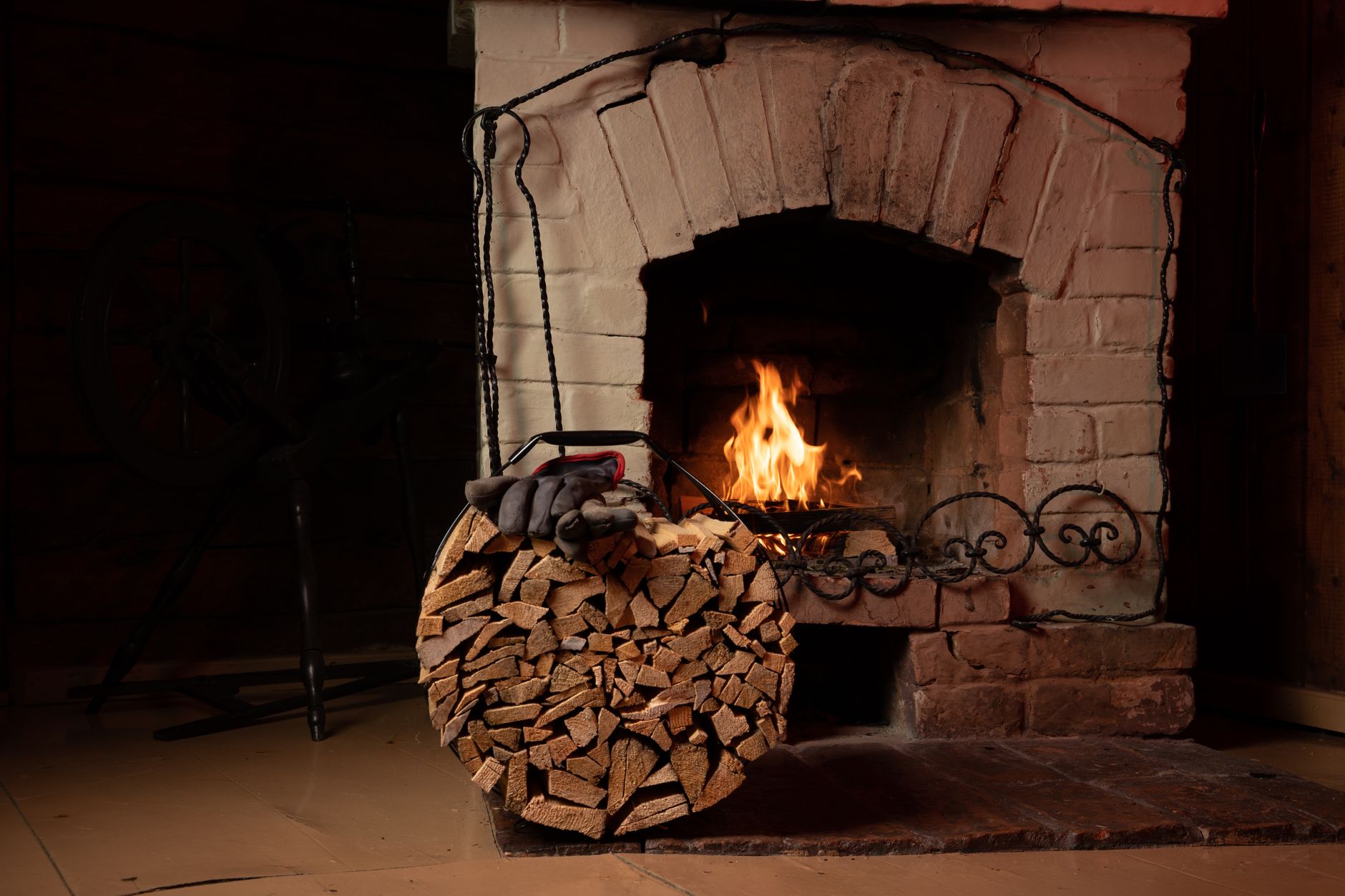
People use the two words as if they mean the same object, and it helps to separate them. The fireplace is the part in your room: the opening, the box where the fire sits, the hearth on the floor and the mantel above. The chimney is everything the smoke passes through after it leaves that box, and everything holding that passage up. That includes the damper, the smoke chamber (a funnel shaped space that narrows the smoke into the flue), the flue itself, the brick or framed structure wrapped around it, and the top of the chimney where it meets the weather: the crown, a poured lid of concrete that keeps weather off the brick, the cap with its screen, and the flashing, the metal strips that seal the gap where the chimney passes through the roof. A chimney inspection covers this longer list. It matters even if the fireplace looks perfect, because most of the trouble starts in places you never see from the couch.
For a house in Inglewood, the outside half of the list gets real attention. Winter storms push water at the crown and the flashing. Summer heat dries and cracks sealants. The ground here shakes now and then, and brick chimneys on older homes take the worst of it; after the 1994 quake a great many in the Los Angeles basin needed repair or removal. A loose brick near the top, a crack running across the stack, or a gap opening between chimney and wall is the sort of thing an owner rarely spots from the yard. We look for it on every visit. If the roof is too steep or too fragile to walk, we say so and check from a ladder and from the attic instead, and the report notes what could and could not be reached that day so you are never left guessing about a blind spot.
Picking the Right Level Without the Jargon
NFPA 211 groups chimney checks into three levels, and the only real question for you is which one fits. Level 1 is a visual look at all the parts that can be reached without tools or opening anything. Pick it when your routine with the fireplace has stayed the same from one winter to the next. Ours costs $52. Level 2 adds a camera fed up the flue so we can see every joint on a screen, plus the attic, the roof and any crawl space the chimney passes through. Buying a home, switching what you burn, or living through a quake or a chimney fire are the usual reasons to choose it. Ours costs $370. The third tier involves opening finished surfaces, such as drywall or a few courses of brick, to reach something hidden. It is uncommon, and we only suggest it when a Level 2 has found a concern that cannot be judged any other way.
A new owner in Inglewood usually sits in one of three spots. You bought recently and the seller had no records: a Level 2 makes sense once, then Level 1 in later years. You have lived here a while and burn a few fires a winter: Level 1 each year is plenty unless something changes. You are planning an insert, a gas conversion or a remodel: a Level 2 before the work saves money, because it shows whether the flue can handle what you have in mind. Whichever level you pick, the report lists each item, what it means and how soon it needs action, in order of safety first. Repairs are never bundled into the visit. They come as a separate written quote, and you decide if and when. You can book either level through the contact page.
How Salter Chimney Contractors Handles a Visit
Terms Explained
Every part named and defined, in person and in writing
Photo Evidence
A picture behind each item in the report
Price in Writing
Agreed by you before any repair starts
Room Protected
Floor covered and vacuum on throughout
Local pages for chimney inspection
Pick your city for notes on its houses and weather as they bear on this work.
CA
Chimney Inspection in Inglewood
Here 78% of homes were built before 1980 and 32% before 1950, and most households rent. If your first place came with a fireplace, a first visit starts with the flue, the inside passage smoke climbs, and the damper that seals it.
Read the city pageCA
Chimney Inspection in Hawthorne
Detached houses are 27% of homes here and only 27% are owner-occupied, so a fireplace is often new to whoever just moved in. Ask your landlord or seller when the firebox, the brick or metal box that holds the fire, was last looked at.
Read the city pageCA
Chimney Inspection in Gardena
Bought one of the 1950s or 1960s houses? Its brick or block chimney may now hold gas logs, ceramic logs burning from a gas line. A first visit checks that the flue above them is still open and sound.
Read the city pageCA
Chimney Inspection in Huntington Park
Before 1950, 42% of these homes were already standing, and renters are the large majority. An old cottage chimney is new to most people moving in, so we explain each part we inspect: firebox, damper, flue and crown.
Read the city pageCA
Chimney Inspection in Los Angeles
With 70% of homes built before 1980 and 28% before 1950, a first LA home usually comes with an older chimney. On a Victorian street or a postwar tract, a first inspection names each part and says what shape it is in.
Read the city pageMore services
Chimney Sweep
Brushing and vacuuming the flue, the tall inner passage that carries smoke out, so tar and soot stop piling up inside.
See details →Chimney Repair
Fixes for the chimney parts that wear out, each one explained before work starts so you know what it does.
See details →Fireplace Inspection
A look at the room side of your fireplace: the firebox, damper, hearth and nearby trim, with every part named for you.
See details →Fireplace Repair
Repairs inside the fireplace you see from the room: loose firebrick, worn joints, a stiff damper or a cracked hearth.
See details →Chimney Level 2 Inspection
A deeper inspection that adds a camera run inside the flue, used when a house sells, a fuel changes or damage is suspected.
See details →Chimney Cap Installation
A metal hat for the top of your chimney that keeps out rain and animals and catches sparks before they reach the roof.
See details →Chimney Flashing Repair
Resealing the joint where your roof meets the chimney, the spot that lets in more rain than any other part.
See details →Chimney Masonry Repair
Brick and mortar work on the outside of the chimney, from crumbling joints to chipped faces and cracks left by past quakes.
See details →Chimney Rebuilds
Taking down a chimney section that has failed and laying it back up in new brick, most often the part above the roof.
See details →Fireplace Cleaning
Cleaning the part of the fireplace you live with: old ash, soot on the brick, stained glass doors and the hearth in front.
See details →Gas Fireplace Cleaning
Yearly cleaning for a gas fireplace or log set: dust out of the burner, haze off the glass, and the flame looked at.
See details →Gas Fireplace Repair
Repairs for gas fireplaces that refuse to light, go out soon after, or burn with a weak or sooty flame.
See details →Fireplace Remodel
A new face for an old fireplace, such as a tiled or stone surround, a fresh mantel or a rebuilt hearth.
See details →Fireplace Inserts
A sealed heater that fits into your existing fireplace opening so the fire warms the room instead of the sky.
See details →Pellet Stove Repair
Service for pellet stoves acting up, whether they refuse to start, shut off midway or burn dirty, with the failed part replaced.
See details →Wood Stove Repair
Fixes for wood stoves and wood inserts: worn door seals, cracked bricks inside, warped baffles and leaky pipe joints.
See details →Gas Logs
Ceramic logs over a gas burner in your open fireplace, lit with a key or the press of a remote.
See details →Chimney Seismic Retrofit
Work that lowers the chance your brick chimney falls in the next strong quake, chosen after we have looked at it.
See details →Chimney Crown Repair
Repair or renewal of the sloped cement cover on top of the brick, which turns rain away from the flue and the sides.
See details →Dryer Vent Cleaning
Clearing lint from the duct that carries hot air from your dryer outdoors, so loads dry faster and heat has somewhere to go.
See details →Chimney Liner Installation
A new inner pipe run down the chimney so smoke and gas exhaust travel up a sound, correctly sized path.
See details →Chimney Leak Repair
Tracing and stopping water that comes in at or around the chimney, whether it shows on a ceiling, a wall or in the fireplace.
See details →Chimney Waterproofing
A clear treatment brushed or sprayed onto chimney brick, meant to shed rain while trapped damp can still escape.
See details →Chimney Damper Repair
Fixing the metal flap above your fireplace, the part that lets smoke out during a fire and keeps drafts out after.
See details →Chimney Chase Cover
A custom metal lid for chimneys built from wood framing and stucco outside, with a factory-made metal flue inside.
See details →